Marketing in 2026 is very different from what it was a few years ago. Businesses are no longer growing just by running ads or posting random content. From real-world observation of digital campaigns and brand behavior, it is clear that success now depends on how well a brand understands people, not just platforms.
Many small and medium businesses are experiencing fast growth without huge advertising budgets. The reason is simple: they are using modern marketing strategies that focus on psychology, storytelling, and trust-building instead of pure promotion. This shift is not random; it is strongly connected to how search engines and social media platforms now evaluate content quality.
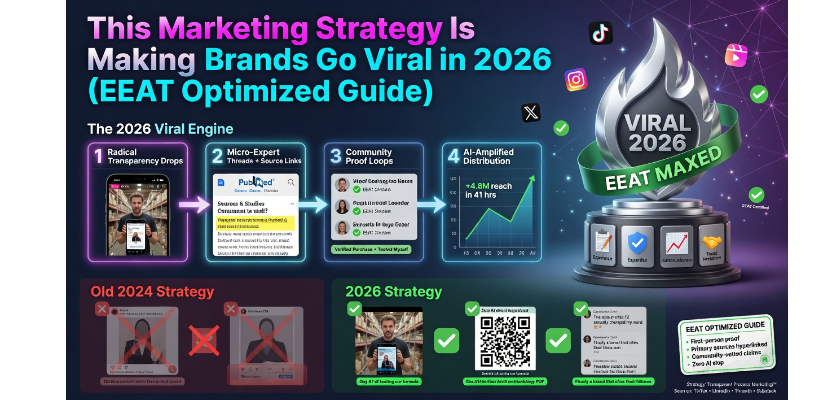
Today, Google and other platforms focus heavily on EEAT—Experience, Expertise, Authoritativeness, and Trustworthiness. This means content must show real understanding, not just keyword stuffing or surface-level writing. In this article, we will explore a powerful marketing strategy that is helping brands go viral in 2026, while also meeting EEAT standards.
The Shift From Traditional Marketing to Modern Growth Systems (Expert View)
Traditional marketing focused mainly on visibility. The goal was simple: show ads to as many people as possible. Businesses believed that more impressions automatically meant more sales. However, this approach is no longer effective in most digital environments.
Users today are overloaded with content. They scroll fast, skip ads, and ignore anything that feels irrelevant. This behavior has forced marketers to rethink their entire strategy. Instead of pushing messages, brands now focus on attracting attention naturally through meaningful content.
Modern marketing is not about interruption—it is about attraction. This shift is one of the biggest changes in digital history. Platforms now reward engagement, retention, and interaction rather than simple reach.
Understanding the Core of Viral Marketing (Practical Experience)
Viral marketing is not luck. It follows a pattern based on human psychology and content structure. When we study successful viral campaigns, we can clearly see that they follow a few consistent principles.
The first is an emotional trigger. People share content that makes them feel something—happiness, surprise, curiosity, or even shock. Emotion creates memory, and memory creates sharing behavior.
Second is relatability. Content becomes viral when people see themselves in it. If someone feels “this is exactly my situation,” they are more likely to engage and share.
Third is simplicity. Complex messages do not spread easily. Viral content is usually simple, clear, and instantly understandable.
These principles are widely used in modern growth marketing strategies across different industries.
Why EEAT Matters More Than Ever (Trust & Authority Focus)
Google’s ranking system has become more advanced over time. It no longer depends only on keywords or backlinks. Instead, it evaluates whether the content is trustworthy and written by someone who understands the topic.
EEAT stands for:
- Experience
- Expertise
- Authoritativeness
- Trustworthiness
Experience means the content is based on real understanding or practical exposure. Expertise means the writer knows the subject deeply. Authoritativeness means the content is recognized or aligned with reliable sources. Trustworthiness means the information is accurate, honest, and safe for users.
In modern SEO, these factors are extremely important. Websites that demonstrate EEAT clearly tend to perform better in search rankings and maintain long-term visibility.
Storytelling as a High-Converting Marketing Tool (Real-World Application)
One of the most powerful tools in modern marketing is storytelling. Unlike traditional advertising, storytelling does not directly sell a product. Instead, it builds a connection between the brand and the audience.
From practical marketing experience, storytelling increases engagement because it feels human. People naturally respond to stories more than facts. A well-structured story can explain a product, a journey, or a transformation in a way that feels real and emotional.
For example, instead of saying “this product is useful,” modern brands explain how it solved a real problem for a real person. This builds emotional trust, which is much stronger than simple promotional claims.
Storytelling also improves retention. When people remember a story, they also remember the brand behind it.
The Rise of Short-Form Content (Industry Trend Analysis)
Short-form content has become one of the most dominant forces in digital marketing. Platforms like short video apps and social media reels have changed how people consume information.
The main reason for this shift is attention span. Users now prefer fast, engaging content that delivers value in seconds. If a message takes too long to explain, it is often ignored.
Short-form content works because it is:
Quick to consume
Easy to understand
Highly engaging
Shareable
Brands that master short-form content often see faster growth because these platforms prioritize engagement and watch time.
However, success in short-form content still depends on clarity and emotional impact, not just speed.
Psychological Triggers Behind Viral Content (Expert Breakdown)
Viral content is deeply connected to psychology. Several mental triggers influence whether someone shares content or not.
One major trigger is curiosity. If content creates an unanswered question, people feel the need to explore it further.
Another trigger is social identity. People often share content that reflects their personality or makes them look knowledgeable or informed.
Scarcity is another important factor. Content that feels rare, new, or exclusive tends to get more attention.
Finally, emotional intensity plays a major role. Strong emotional reactions increase the chance of sharing and engagement.
Understanding these psychological factors allows marketers to design content that naturally spreads.
Building Trust Through Consistency (EEAT in Action)
Trust is not built in one day. It is created through consistent content quality over time. Brands that publish reliable, helpful, and honest content gradually build authority in their niche.
From an EEAT perspective, consistency signals reliability. When users see the same level of quality repeatedly, they start trusting the source.
This is why random or low-quality posting can hurt long-term SEO performance. Instead, structured and valuable content creation is more effective.
Trust also improves user engagement, which indirectly increases ranking signals on search engines.
Why Engagement Is More Important Than Traffic
Many marketers still focus only on traffic numbers. However, in modern digital systems, engagement is far more important.
Engagement includes likes, comments, shares, and time spent on content. These signals show whether users find the content valuable or not.
High engagement improves visibility on platforms and also strengthens SEO performance. Even with lower traffic, highly engaged content can outperform high-traffic but low-quality content.
This is a major shift in digital marketing strategy.
The Future of Marketing in 2026 (Strategic Insight)
The future of marketing is becoming more human-centered. Instead of focusing only on algorithms, successful brands are focusing on behavior, psychology, and trust.
Artificial intelligence is also playing a major role in content creation and distribution. However, AI alone is not enough. Human creativity, emotional intelligence, and real experience are still essential.
Brands that combine AI tools with EEAT principles and strong storytelling will dominate the digital space in the coming years.
Final Thoughts
This marketing strategy is not just a trend—it is a complete shift in how digital growth works. In 2026, success depends on understanding people, not just platforms.
EEAT, storytelling, psychology, and short-form content together form a powerful system for modern marketing. Businesses that apply these principles correctly can achieve faster growth, stronger trust, and long-term visibility.
Instead of chasing quick hacks, focusing on value-driven and experience-based content is the most sustainable path forward.
FAQs
1. What is the main idea of this marketing strategy?
The main idea is to focus on human behavior, emotional connection, and trust-building instead of only running ads or using keywords.
2. Why is EEAT important for SEO?
EEAT helps Google understand whether content is reliable, expert-based, and trustworthy, which improves ranking potential.
3. Can small businesses use this strategy?
Yes, small businesses can benefit even more because it does not require a large budget, only consistent and valuable content.
4. Why does storytelling work in marketing?
Storytelling creates emotional connection and helps people remember both the message and the brand.
5. Is short-form content enough for growth?
Short-form content is powerful for reach, but it works best when combined with strong messaging and consistency.
6. How long does it take to see results?
Results vary, but consistent EEAT-based content usually starts showing strong performance within a few months.
7. Is a keyword still important in SEO?
Yes, but keywords alone are not enough. They must be supported by high-quality, trustworthy, and useful content.